


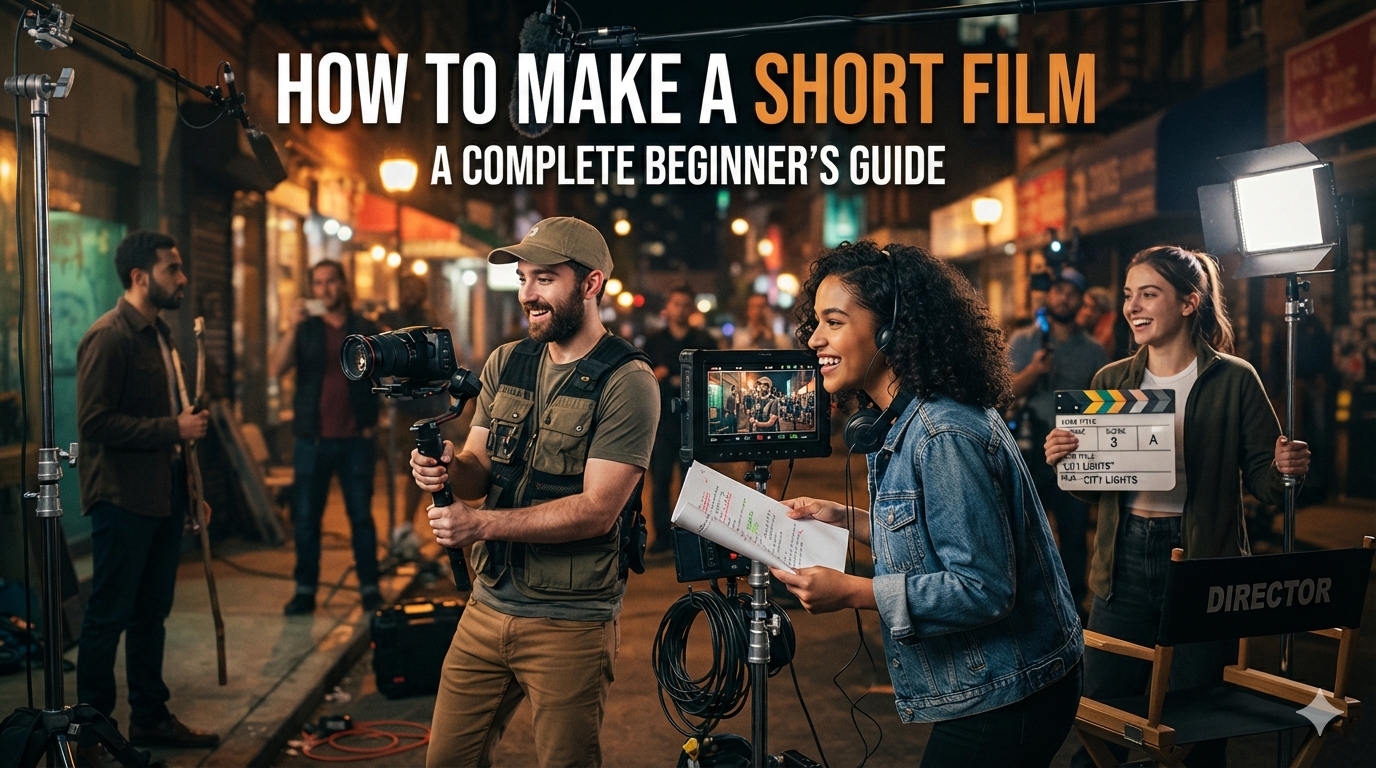
Creating a short film may look complicated, but you do not need a large production company or an expensive camera to get started. With a good story, careful planning, a smartphone or camera, and basic editing skills, one person or a small team can produce a complete short film.
Short films can be used for entertainment, social media, film festivals, YouTube, websites, or as a starting point for developing a longer drama series.
This guide explains the main steps involved in creating a short film, from the first idea to the final release.
1. Start With a Simple Story
The most important part of a short film is the story.
Before thinking about cameras, special effects or actors, decide what you want the audience to experience.
A short film usually works best when it focuses on:
One main story
A small number of characters
One central conflict
A clear beginning, middle and ending
One emotional idea or message
For example, instead of creating a story about an entire family over 20 years, a short film could focus on one daughter returning home to see her father after many years apart.
The smaller story is easier to write, film and edit while still creating an emotional experience.
A Simple Story Formula
You can start with this structure:
Beginning → Conflict → Development → Turning Point → Ending
For example:
Beginning: A young woman returns to her hometown.
Conflict: She discovers that her father plans to sell their old family home.
Development: They argue about the decision and remember their past.
Turning Point: She discovers why her father wants to sell the house.
Ending: They finally understand each other and make a decision together.
A simple story can be more effective than a complicated story that is difficult to finish.
2. Decide the Length
Choose the approximate length before writing the complete script.
For a beginner production, you could start with:
Type | Approximate Length |
|---|---|
Micro short | 1–3 minutes |
Short film | 3–15 minutes |
Short drama episode | 5–20 minutes |
Extended short film | 20–40 minutes |
Short-form vertical dramas can also use much shorter episodes, sometimes only a few minutes or less.
For a first project, a 3–10 minute film can be a practical target.
3. Write the Script
Once you know the story, turn the idea into a screenplay.
A basic screenplay should include:
Scene location
Time of day
Character actions
Dialogue
Important sounds
Visual information
Transitions when necessary
For example:
INT. BEDROOM — NIGHT
Sokha sits beside the window, looking at an old photograph.
Her phone vibrates.
She looks at the screen.
MESSAGE: “I'm coming home tomorrow.”
Sokha stops breathing for a moment.
She looks at the photograph again.
This gives the director and actors a clear understanding of what needs to happen.
4. Create Your Characters
Each important character should have a purpose.
Ask:
Who are they?
What do they want?
What are they afraid of?
What problem are they facing?
How do they change during the story?
Even a five-minute film can have strong characters.
For example:
Main character: Wants to repair her relationship with her father.
Father: Wants to protect his daughter but struggles to express his feelings.
Friend: Helps the main character understand what happened in the past.
Good characters create emotional reasons for the audience to continue watching.
5. Plan Your Scenes
Before filming, create a shot list.
A shot list tells you what needs to be filmed.
For example:
Shot | Description | Location |
|---|---|---|
1 | Wide shot of the house | Exterior |
2 | Character walking toward the door | Exterior |
3 | Close-up of hand opening the door | Entrance |
4 | Character looking around the room | Living room |
5 | Close-up of old photograph | Living room |
6 | Father enters the room | Living room |
7 | Two characters talk | Living room |
8 | Close-up during emotional moment | Living room |
Planning shots before filming can save a lot of time.
6. Choose Your Location
You do not need an expensive studio.
A short film can be filmed in:
A house
Apartment
Restaurant
Café
Office
School
Street
Park
Beach
Small studio
Choose locations that match the story.
Also consider practical issues such as:
Noise
Lighting
Electricity
Weather
Permission
Background people
Parking
Available filming time
A beautiful location is not useful if you cannot control the sound or film there legally.
7. Choose Your Camera
You can start with equipment you already have.
A smartphone can be enough for a beginner short film if you use it carefully.
Possible equipment includes:
Smartphone
Mirrorless camera
DSLR
Tripod
Gimbal
External microphone
LED light
Reflector
The camera is important, but good lighting, sound and storytelling can have a bigger impact than simply buying an expensive camera.
8. Pay Attention to Sound
Many beginner filmmakers concentrate on video quality and forget about audio.
Poor sound can make a film difficult to watch.
Whenever possible, use:
External microphone
Lavalier microphone
Shotgun microphone
Quiet filming locations
Headphones for monitoring audio
Record a few seconds of room tone at every location.
Room tone can be useful during editing when you need to make cuts between dialogue.
9. Use Good Lighting
Lighting helps determine the mood of a scene.
You can use:
Natural light
Film near windows or outdoors when appropriate.
LED lights
Useful when you need consistent lighting indoors.
Practical lights
Lamps, signs and other lights that already exist inside the scene can also contribute to the visual style.
Try to avoid extremely bright backgrounds behind your actors unless that is intentional.
10. Direct the Actors
Actors need to understand more than just their dialogue.
Before filming a scene, explain:
What happened before the scene
What the character wants
How the character feels
Who they are speaking to
What changes during the scene
Instead of simply saying:
“Say the line sadly.”
You can explain the situation:
“You have been waiting for this person for five years. You finally see them, but you don't want them to know how much you missed them.”
This gives the actor something emotional to play.
11. Film Multiple Takes
Do not assume the first take is perfect.
Film several versions.
You might record:
Normal performance
More emotional performance
Quieter performance
Different camera angle
Close-up
Wide shot
Having multiple options gives you much more flexibility during editing.
12. Capture Different Shot Sizes
A short film becomes more interesting when you combine different shots.
Wide Shot
Shows the environment and location.
Medium Shot
Usually shows the character from around the waist or chest upward.
Close-Up
Shows the character's face and emotions.
Extreme Close-Up
Focuses on a small detail, such as:
Eyes
Hands
Phone
Photograph
Key
Letter
Combining these shots allows the editor to control how the audience experiences the scene.
13. Edit the Film
After filming, organize all your footage.
A basic editing workflow is:
Import → Organize → Select → Rough Cut → Fine Cut → Sound → Color → Titles → Export
Remove footage that is unnecessary.
Then arrange the remaining clips according to the story.
Editing is not simply putting clips together. It is where you control the pace and emotion of the film.
A long pause can create tension.
A quick series of cuts can create excitement.
A slow sequence can create a feeling of sadness or reflection.
14. Add Music and Sound Effects
Music can dramatically change how a scene feels.
For example:
Romance: soft instrumental music
Suspense: low-frequency sounds and tension-building music
Comedy: light and energetic music
Sad scene: slower and more emotional music
However, only use music and sound effects that you have permission to use.
Using copyrighted music without the necessary rights can create problems when publishing your film.
15. Color Correction and Color Grading
After editing, adjust the image.
First perform color correction so that exposure, white balance and skin tones look consistent.
Then use color grading to create a particular visual mood.
For example:
Warm tones → romantic or nostalgic feeling
Cooler tones → serious or dramatic feeling
High contrast → stronger cinematic appearance
Soft tones → gentle or emotional atmosphere
Do not overdo the effects. Consistency is usually more important than extreme color manipulation.
16. Add Subtitles
Subtitles can significantly expand your audience.
For example, a Khmer short film could include:
Khmer dialogue + English subtitles
You could also create:
Chinese dialogue + Khmer subtitles + English subtitles
Make sure subtitles are:
Easy to read
Properly synchronized
Large enough on mobile screens
Not covering important visual information
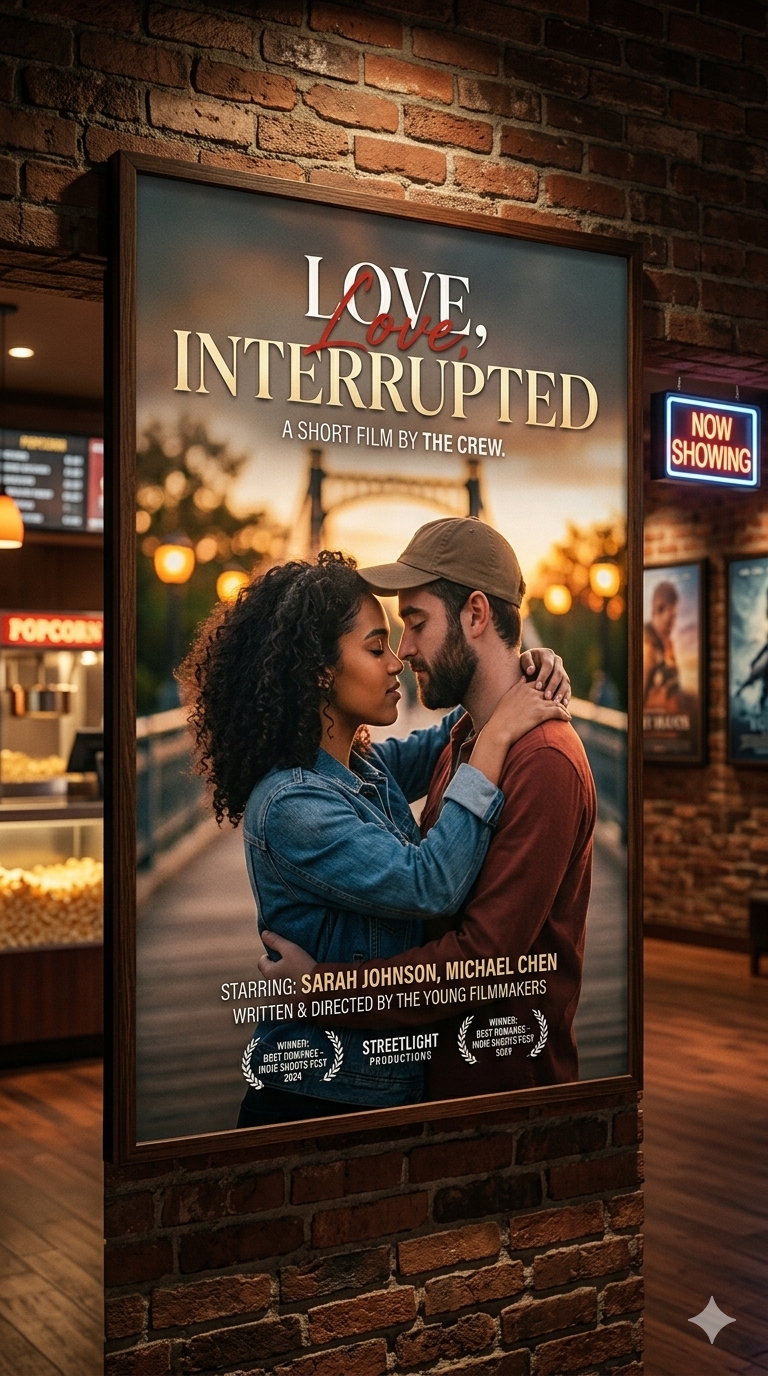
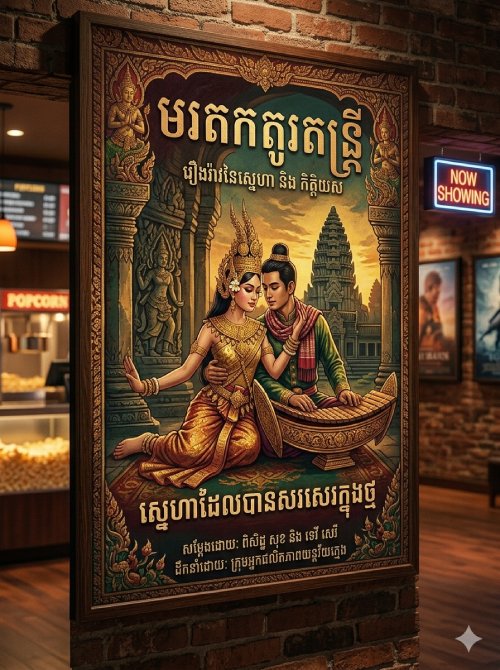
17. Create the Poster and Thumbnail
A short film also needs promotional material.
Create a poster containing:
Film title
Main actors
Key image
Production name
Release information
For online platforms, also create a thumbnail that clearly communicates the story.
A strong thumbnail should make people understand the type of film immediately.
18. Publish the Short Film
Possible distribution platforms include:
YouTube
Facebook
TikTok
Instagram
Your own website
Film festival platforms
Streaming platforms
Before publishing, make sure you have the necessary rights for:
Actors
Music
Locations
Images
Video footage
Logos
Third-party intellectual property
This is particularly important if you intend to monetize the film.
19. Making Short Drama for a Website
If your goal is to create short dramas for your own entertainment website, you can build a repeatable production system.
For example:
Story Idea
↓
AI-assisted Story Development
↓
Script
↓
Character Design
↓
Storyboard
↓
Filming or AI Production
↓
Voice / Dialogue
↓
Editing
↓
Subtitles
↓
Poster
↓
Website Upload
↓
Promotion
This allows you to create multiple original short dramas instead of treating every project as a completely new production.
20. Can AI Help Make a Short Film?
Yes. AI can assist with many parts of the production process.
For example, AI can help with:
Story ideas
Character development
Screenwriting
Dialogue improvement
Storyboards
Concept art
Background generation
Voice generation
Translation
Subtitle creation
Music development
Video generation
Promotional images
However, AI-generated material should still be reviewed by a human.
The creator should check:
Character consistency
Story continuity
Visual quality
Dialogue
Copyright and licensing
Voice quality
Cultural accuracy
Platform requirements
AI is best treated as a production tool, rather than a replacement for storytelling and creative direction.
21. A Simple Beginner Production Plan
If you are making your first short film, you can start with a very small production.
Day 1 — Story
Create the idea and ending.
Day 2 — Script
Write the screenplay and dialogue.
Day 3 — Planning
Choose actors, locations, costumes and props.
Day 4 — Shooting
Film all scenes.
Day 5 — Editing
Create the first complete version.
Day 6 — Sound and Subtitles
Add music, sound effects and subtitles.
Day 7 — Final Production
Color correction, poster, thumbnail and export.
The schedule can be longer for a more complicated production, but the principle remains the same: finish a small project before trying to create a large one.
Final Thoughts
Making a short film is a combination of storytelling, planning, acting, cinematography, sound, editing and distribution.
You do not need a huge budget to begin.
A simple story filmed with a smartphone can be more effective than an expensive production without a strong story.
The best way to learn is to make your first film, study what worked and what did not, and then make the next one better.
Start with one story, a few characters and a manageable location. Once you understand the complete production process, you can gradually increase the length, production quality and complexity of your projects.
MyDramaChannel will continue to explore short dramas, filmmaking, AI-assisted production and new forms of digital entertainment.