


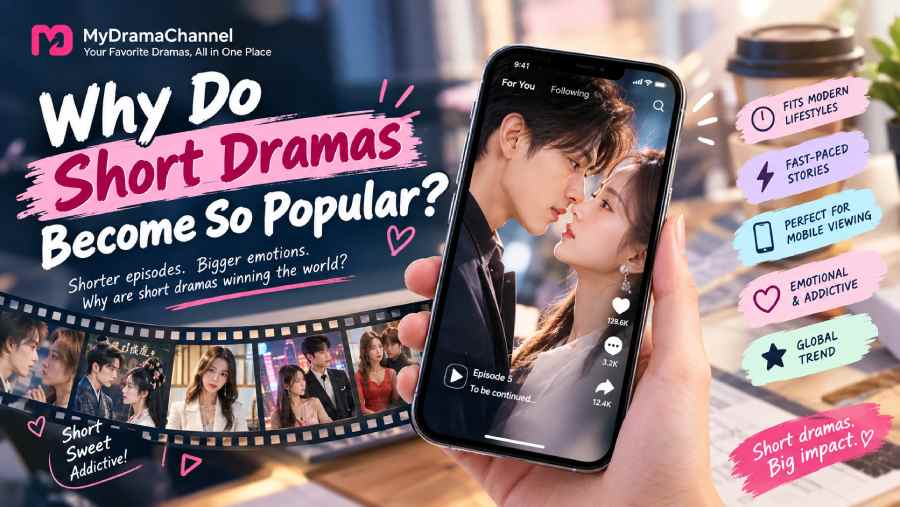
Short dramas have rapidly become one of the most noticeable trends in the modern entertainment industry. From China to Southeast Asia and other international markets, short-form drama series are attracting millions of viewers with fast-paced stories, short episodes, dramatic twists, and highly addictive storytelling.
Unlike traditional television dramas that may contain 20 to 40 episodes, short dramas often tell their stories through episodes that last only a few minutes. Many are designed specifically for smartphones and can be watched vertically with a simple swipe.
But what makes short dramas so popular?
1. They Fit Modern Viewing Habits
One of the biggest reasons for the popularity of short dramas is simple: people have less time and shorter attention spans for entertainment.
Many viewers watch content while commuting, taking a break, waiting for someone, eating, or relaxing before going to sleep. Watching a 45-minute television episode may require a dedicated block of time, while a short drama episode can be completed in just a few minutes.
This makes short dramas particularly suitable for mobile audiences.
Instead of asking viewers to sit down and watch an entire episode, short dramas allow them to enjoy a complete piece of the story almost anywhere and at any time.
2. The Stories Move Very Quickly
Traditional dramas often spend several episodes introducing characters, relationships, and conflicts.
Short dramas usually have little time for slow development.
The story often begins with an immediate conflict: a secret identity, a broken relationship, revenge, a contract marriage, a family dispute, a misunderstanding, or an unexpected encounter.
Each episode is designed to keep the audience curious about what happens next.
This fast storytelling style creates a powerful viewing cycle:
Conflict → Suspense → Twist → Cliffhanger → Next Episode
The viewer may intend to watch only one episode but quickly finds themselves watching five, ten, or even dozens more.
3. Every Episode Needs a Reason to Continue
One of the most important characteristics of successful short dramas is the cliffhanger.
An episode may end just as a major secret is revealed, a character arrives unexpectedly, a relationship changes, or a conflict reaches its most exciting moment.
Instead of giving viewers a complete resolution, the story creates another question.
For example:
Who is the mysterious character?
Will the couple get back together?
Will the protagonist discover the truth?
Will the revenge plan succeed?
What will happen after the shocking revelation?
This creates a strong psychological reason to continue watching.
4. Short Dramas Understand Mobile Audiences
Many short dramas are designed around the smartphone experience from the beginning.
Vertical video is particularly important because viewers can watch without rotating their phones. The format feels natural on platforms where users are already accustomed to scrolling through short videos.
The combination of:
Vertical screen + Short episodes + Fast editing + Strong hooks
creates an entertainment format that fits naturally into today's mobile-first environment.
5. Popular Genres Are Easy to Understand
Another reason short dramas attract large audiences is their use of familiar and immediately understandable story concepts.
Common themes include:
Romance
Revenge
Contract relationships
Second chances
Secret identities
Billionaire romance
Historical romance
Family conflict
Time travel
Rebirth
Mystery
Workplace relationships
Fantasy
Viewers do not necessarily need a long introduction to understand the central conflict.
A simple premise can be enough to make someone curious.
6. Emotional Stories Encourage Binge-Watching
Short dramas often focus heavily on emotion.
Love, betrayal, revenge, jealousy, family conflict, redemption, and unexpected reunions are powerful storytelling tools because viewers quickly become emotionally invested in the characters.
When an audience wants to know whether a character will finally succeed or get revenge, stopping the story becomes difficult.
This is one reason short dramas can have surprisingly high completion and binge-watching rates despite their short episode length.
7. They Can Be Produced More Quickly
Short dramas can also have advantages from a production perspective.
Because the episodes are shorter and the overall storytelling structure is more compact, production teams can sometimes complete projects faster than traditional long-form television dramas.
This allows producers to respond more quickly to audience trends.
If a particular genre suddenly becomes popular, creators can develop new stories around similar themes without necessarily committing to the lengthy production process associated with a large traditional television series.
However, faster production does not automatically mean lower production quality. Successful short dramas still require strong scripts, performances, editing, cinematography, and production management.
8. Social Media Helps Them Go Viral
Short dramas are closely connected to social media.
A dramatic scene can be turned into a short promotional clip and shared across platforms such as TikTok, Douyin, Instagram Reels, YouTube Shorts, and other video platforms.
A single scene can attract viewers who have never heard of the drama before.
For example, a short clip showing a shocking confession or unexpected plot twist may receive millions of views. Some viewers then search for the full series.
This creates a powerful marketing cycle:
Short Clip → Curiosity → Search → Episode 1 → Binge-Watching
The audience can effectively become part of the marketing process by sharing memorable scenes with friends and followers.
9. Viewers Don't Need to Wait for Long Episodes
Traditional television dramas often require viewers to wait days between episodes or spend weeks following a story.
Short dramas can provide much more content in a shorter period.
Some series release multiple episodes at once, allowing viewers to continue immediately after finishing one episode.
For audiences who enjoy binge-watching, this can make short dramas particularly attractive.
10. The Business Model Is Different
The popularity of short dramas is not only about storytelling. There is also a growing business ecosystem behind them.
Depending on the platform and market, short dramas can generate revenue through advertising, paid episodes, subscriptions, virtual items, platform partnerships, or other forms of monetization.
Because individual episodes are short, creators can experiment with different stories and formats while responding quickly to audience behavior.
The most successful productions can also generate additional opportunities through international distribution, adaptations, remakes, and licensing.
11. Short Dramas Are Becoming More International
Although China has been one of the most important markets for short-form drama, the format is increasingly reaching international audiences.
Stories can be translated, dubbed, subtitled, or adapted for different countries.
A simple emotional story can cross language barriers more easily than highly complicated narratives because the central themes—love, family, revenge, ambition, and relationships—are universal.
This has created opportunities for short dramas to become a global entertainment format rather than a purely local phenomenon.
12. The Audience Can Discover Stories Instantly
Traditional television relies heavily on scheduled programming.
Short dramas benefit from recommendation algorithms.
A viewer may watch one romantic short drama and immediately receive recommendations for several similar series.
This makes discovering new dramas extremely easy.
The viewer does not necessarily need to search for a title. The platform can bring the next story directly to them.
This combination of algorithmic recommendations and addictive storytelling can significantly increase viewing time.
Will Short Dramas Replace Traditional Dramas?
Probably not.
Short dramas and traditional dramas serve different viewing preferences.
Traditional dramas have more time to develop characters, relationships, atmosphere, world-building, and complicated storylines. Viewers who enjoy deeper character development may still prefer long-form series.
Short dramas, meanwhile, are particularly effective for viewers who want fast entertainment, emotional intensity, and stories that can be watched in short periods.
Rather than completely replacing traditional television dramas, short dramas are becoming another important format within the entertainment industry.
The Future of Short Dramas
The continued growth of short dramas suggests that entertainment is becoming increasingly flexible.
Viewers now have more choices than ever:
Movies.
Television series.
Streaming dramas.
Web series.
Vertical short dramas.
Short-form videos.
The success of short dramas demonstrates that audiences are not necessarily looking for shorter stories simply because they have shorter attention spans.
They are looking for stories that respect their time while giving them a reason to keep watching.
The most successful short dramas understand this principle very well.
They introduce the conflict quickly, create emotional investment, deliver frequent twists, and end each episode with a reason to watch the next.
That combination makes short dramas one of the most addictive and rapidly evolving formats in today's entertainment landscape.
Final Thoughts
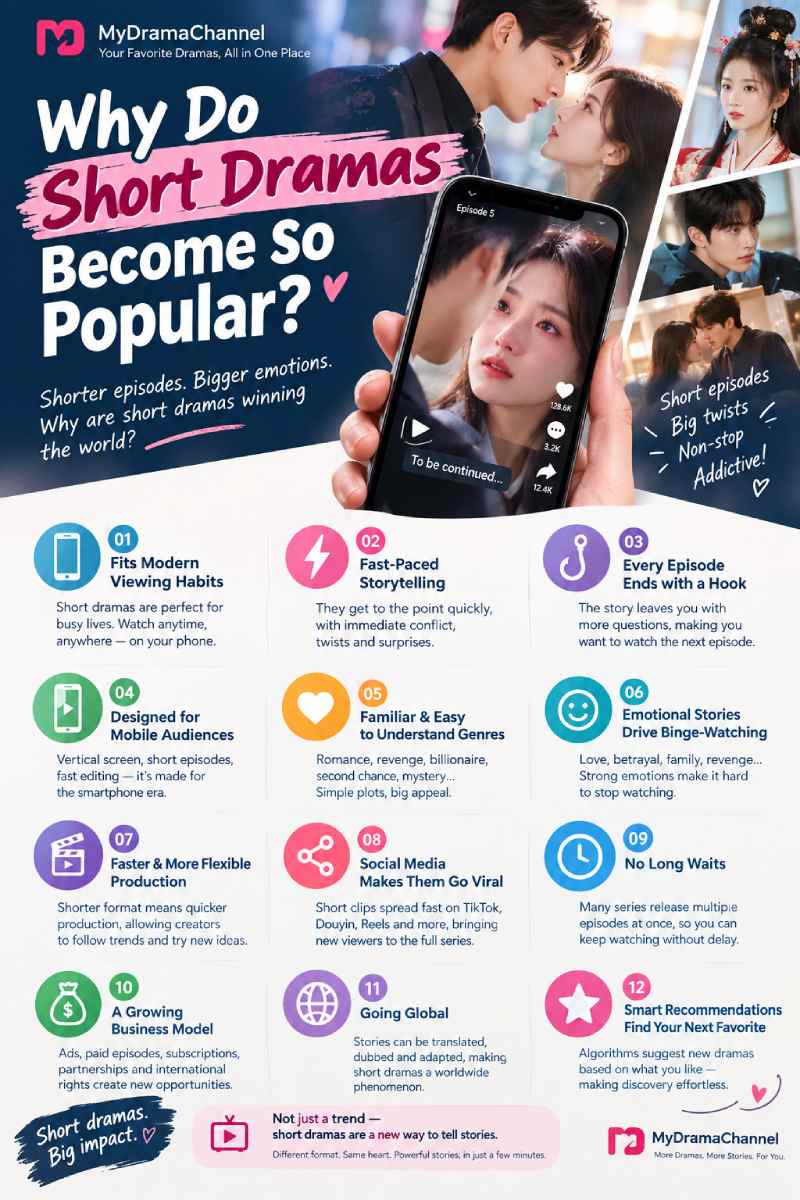
The popularity of short dramas comes from several factors working together: mobile-friendly viewing, fast storytelling, emotional conflicts, cliffhangers, social media distribution, recommendation algorithms, and flexible production models.
Their biggest strength may be their ability to turn a few minutes of free time into an engaging story.
And as streaming platforms and audiences continue to evolve, short dramas are likely to remain an important part of the global entertainment industry.